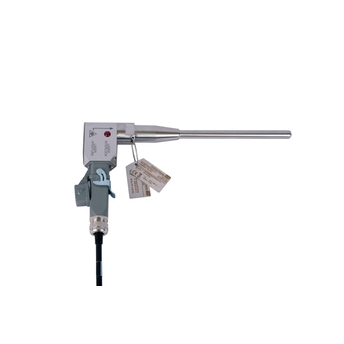
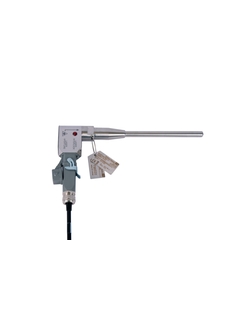
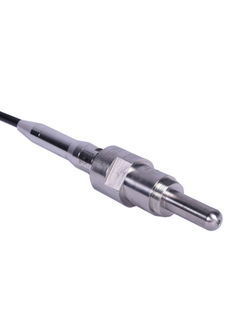
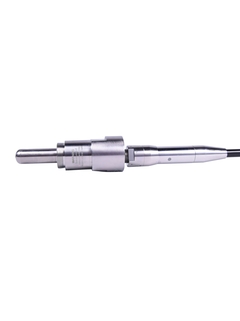
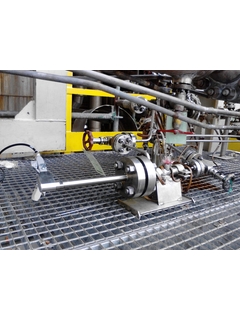
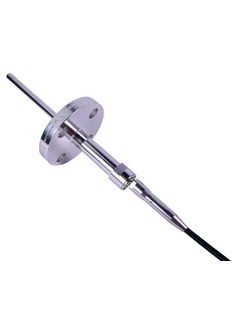
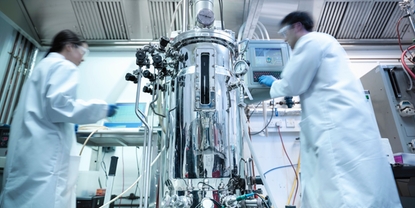
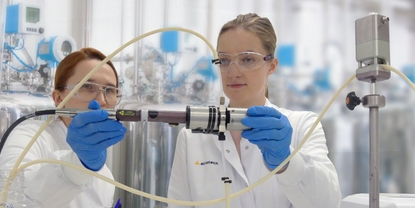
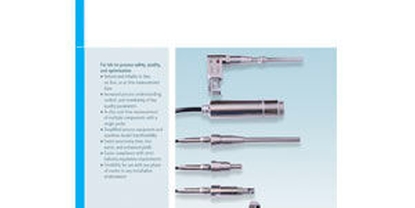
The Raman Rxn-40 probe is a sealed immersion probe for in situ Raman spectroscopy of liquid-phase samples in a laboratory or process plant setting. The process connection for the Raman Rxn-40 can be swaged, compression-mounted, flange-mounted, or installed in an Endress+Hauser flow cell, and is NeSSI compatible. These versatile options allow for direct insertion in slip-streams, drain-values, reactors, circulation loops, blend headers, and inlet or outlet pipework.
Chemical: reaction monitoring, blending, catalysis, feed and final product monitoring
Pharmaceutical: API reaction monitoring, crystallization, polymorph, blending
Benefícios
Customizable to your process
Robust design with a range of process connections
In situ/no transfer lines or fast-loops required
Faster, simpler installation
Support for a range of chemical processes and corrosivity requirements
Ensures safety and meets regulatory requirements
Suitable for hazardous/classified environments
Espectroscopia Raman - tecnologia de análise óptica avançada
Aumente a segurança da fábrica, garanta a qualidade do produto e otimize operações. A espectroscopia Raman mede a composição e estrutura molecular de suas amostras do laboratório ao processo em tempo real
Raman downstream process measurement of biosimilars - Alvotech’s testing of the protein purification process during ultrafiltration/diafiltration (UF/DF)
Learn how Raman Spectroscopy can provide analysis solutions for challenging stream conditions, by reading the white paper focused on two different customer case studies.
A cobertura espectral da sonda é limitada pela cobertura do analisador utilizado.
Temperatura ambiente
Atmosferas não explosivas: -30 a 150 °C / -22 a 302 °F Atmosferas explosivas: T4: –20 a 70 °C / –4 a 158 °F T6: –20 a 65 °C / –4 a 149 °F Limitado à temperatura ambiente normal IEC 60079-0 para Coreia
Potência do laser máxima na cabeça da sonda (mW)
< 499
Interface da amostra
Temperatura, configuração mini Rxn-40: -30 a 120 °C / -22 a 248 °F (aço inoxidável 316L) -30 a 150 °C / -22 a 302 °F (liga C276) -30 a 150 °C / -22 a 302 2 °F (Titânio grau 2) Rampa de temperatura: ≤ 30 °C/mín ≤ 54 °F/mín Temperatura, Rxn-40: -30 a 120 °C / -22 a 248 °F (aço inoxidável 316L) -30 a 280 °C / -22 a 536 °F (liga C276) -30 a 315 °C / -22 a 599 °F (Titânio grau 2) Rampa de temperatura: ≤ 30 °C/mín ≤ 54 °F/mín Flange: Flanges tipo B ASME B16.5 e DIN EN1092 disponível sob encomenda Umidade relativa: Até 95%, sem condensação
Pressão
Pressão mínima: Vácuo total (0 Bara) mas não vácuo ultra-alto (UHV) onde a liberação de gases pode ser um problema Pressão máx. mini configuração do Rxn-40: 157,1 barg/ 2279 psig (aço inoxidável 316L) 199,3 barg/ 2890 psig (liga C276) 153,6 barg/ 2228 psig (titânio grau 2) Pressão máxima, Rxn-40 de 1/2 polegada: 142,4 barg/ 2066 psig (aço inoxidável 316L) 158,1 barg/ 2293 psig (liga C276) 65,2 barg/ 946 psig (titânio grau 2) Pressão máxima, Rxn-40 de 3/4 e 1 polegada: 169,5 barg/ 2458 psig (aço inoxidável 316L) 182,8 barg/ 2651 psig (liga C276) 72,2 barg/ 1047 psig (titânio grau 2)
Materiais molhados
Metal: Liga C276, aço inoxidável 316L ou titânio grau 2 Janela: Safira de ultra pureza
Cabo de fibra óptica
Cabo vendido separadamente
Comprimento
Configuração mini Rxn-40, comprimento imersível: 36 mm / 1,42 pol. Rxn-40: Comprimento imersível máximo de acordo com a escolha do material
An overview brochure about our Raman Rxn5 analyzer (including the Raman Rxn-30 probe, the Rxn-40 probe,), a Raman spectroscopy analyzer system for gas phase measurements powered by Kaiser Raman technology.
Raman-Anwendungsleitfaden für die
Life-Sciences-Industrie
PU (publicação)
Versão em alemão - 09/2025
New version available in English
Ein Leitfaden zu unseren Anwendungshinweisen zur Raman-Spektroskopie für die Life-Science-Industrie (Raman Rxn2-Analysator, Raman Rxn4-Analysator, Rxn-10-Sonde, Rxn-20-Sonde, Rxn-45-Sonde, Rxn-46-Sonde und Zubehör für Sondenoptiken (blO-Optic, Raman- Single Use-Optiksystem / SUB, Immersionsoptik, berührungslose Optik)
Raman spectroscopy installation in hazardous areas (ATEX,
IECEx, NEC/CEC)
PU (publicação)
Versão em inglês - 04/2026
New version available in English
This learning article explains how Raman spectroscopy systems are safely installed in hazardous areas to meet ATEX, IECEx, and North American standards.
Usamos cookies para melhorar sua experiência de navegação, coletamos estatísticas para otimizar a funcionalidade do site e entregar anúncios e conteúdo personalizados.
Ao selecionar "Aceitar todos", você consente nosso uso de cookies.
Para mais detalhes, revise nossa Política de cookies .